






The IALD and the ACE: A Shared Commitment to Advancing the Lighting Design Profession
THE IALD, INTERNATIONAL ASSOCIATION OF LIGHTING DESIGNERS, founded in 1969, is an internationally recognized non-profit organization dedicated to supporting a global network of lighting design professionals who satisfy its rigorous qualification process. THE ACE, ASSOCIATION DES CONCEPTEURS LUMIÈRE ET ÉCLAIRAGISTES, is a french professional association whose mission is to promote light as a design medium and to advance the profession of independent lighting designers.
The IALD strives to set the global standard for lighting design excellence by promoting the advancement and recognition of professional lighting designers. The IALD is the authority on lighting design for the global community; the association promotes and advocates for the profession, educates and serves members, and advances the value of lighting design with key influencers.
The ACE contributes to energy efficiency and the reduction of environmental impact; participates on the environment and the planning and enhancement of the built environment; promotes the responsible, innovative, and effective use of light; disseminates knowledge and expertise related to lighting design and architectural lighting; uphold the ethical principles governing the practice of lighting design; support excellence throughout the lighting design process, from initial programming and concept development through implementation and maintenance; advocate for the professional recognition of independent lighting designers.
Can you both present your organizations, and tell us how they work and what their missions are?
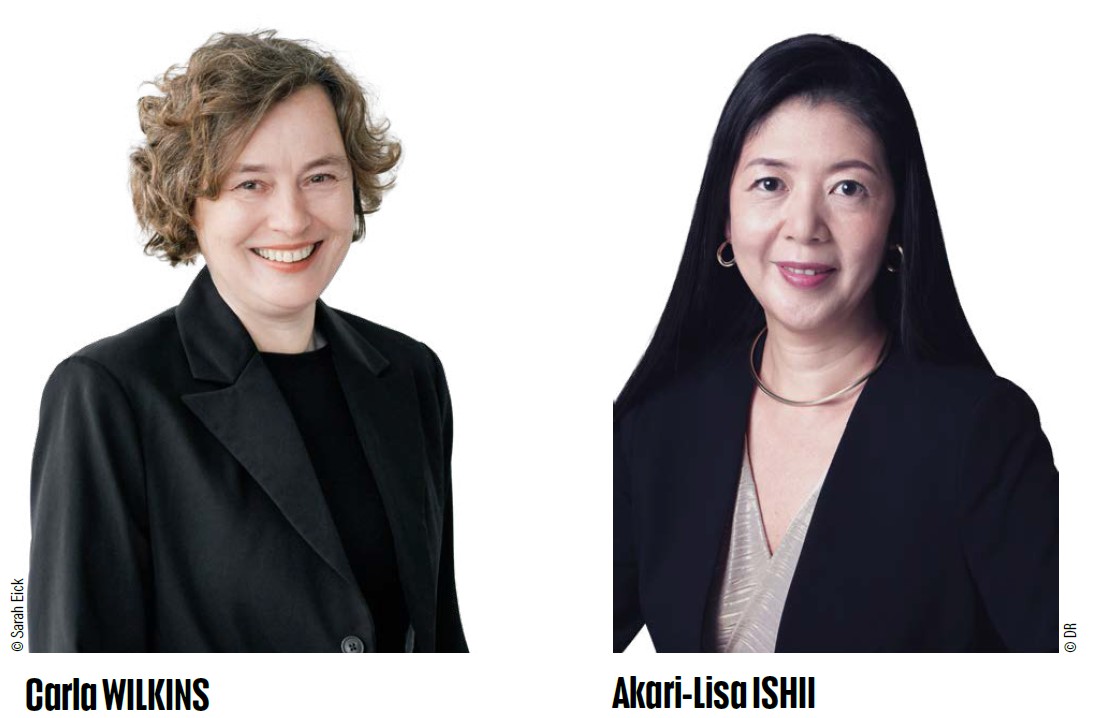
Carla Wilkins – IALD stands for the International Association of Lighting Designers and was founded in 1969. We have around 1,400 members worldwide. I have been President of the IALD since January 2026. We operate on a global scale. The association was originally founded in the United States, but as it grew, it became increasingly international and eventually evolved into a truly global organization. As President, I am especially delighted that, as a European and a German, I have received such strong support from our members. It shows that they genuinely want a moreglobal approach and a united voice for the lighting design profession.
Our most important mission is to ensure that the profession of qualified lighting designer is recognized and established worldwide as a certified profession. We are also involved in European regulatory matters. As a global organization, we must rely not only on our design intelligence as lighting designers but also on our cultural intelligence. We come from different countries, cultures and professional environments, and we should always remain respectful, curious and open-minded. I am truly convinced that we have a tremendous profession and that light is an extraordinary medium.
Lisa Ishii – The ACE has existed since 1995. Vincent Thiesson is our current President, and I have been Vice-President since last year. We have 155 members and 62 partners. Our members are all independent lighting designers based in France, although we also have a few members living and working abroad. Our work is currently structured around three major pillars, among others. The first is raising awareness of our profession, with goals that are very much aligned with those of the IALD: advocating for sustainable lighting design and reflecting on the future
of our profession. Last year, for example, we published a white paper presenting our collective vision of what the
profession could become over the next thirty years. As ACE celebrated its 30th anniversary, we took the opportunity
not only to look back at our history but also to imagine what the profession should and could become
over the next three decades. As Vice-President, I support Vincent Thiesson in his role as President. We work with
a board of seven members and meet every three weeks. It is a very dynamic group, driven by great energy and a
strong spirit of collaboration. I am personally responsible for international relations and interdisciplinary collaborations, particularly with architects, landscape architects and scenographers. I have also been an IALD member for more than twenty years. The more involved you become in an association, the more you discover its richness. You come to appreciate its diversity, its challenges, its activities and the incredible energy of its members. This is something I value deeply because it is something our two organizations have in common.
Last year, for example, Carla Wilkins and I met with representatives of several European lighting design associations
to discuss international cooperation between our organizations. Alongside the IALD, there were Italian, Spanish, Estonian and German associations. These exchanges are extremely valuable because, although we all pursue the
same overall objectives, each organization has its own specific context and priorities.
At the national level, we each face different challenges, yet it is essential that we speak with one common voice.
The more united we are, the stronger and more influential that voice becomes.
Carla Wilkins – I would like to add one important point: both of our organizations are non-profit associations, entirely driven by the commitment of our members and by voluntary work. This is often underestimated. For me, it is also about recognizing and respecting those who devote their time, alongside their daily professional activities, to shaping the future of our profession. I think it is encouraging that this spirit of commitment still exists today, at a time
when everything seems to be available online and people sometimes wonder why they should get involved. Yet it
is precisely this personal commitment from each lighting designer working for the association that gives it its real
strength.
How have the IALD and the ACE been working together? How do you embrace your differences?
Lisa Ishii – We began a very fruitful collaboration last year. It was initiated by APIL, the Italian association of lighting
designers, on Euroluce. Like the IALD, the APIL now welcomes in-house lighting designers as members, which represents a significant and historic change. The Spanish association has also adopted the same approach. In France, however, the ACE remains firmly committed to representing independent lighting designers only. We have discussed this issue internally on several occasions and, for the time being, there is absolutely no intention of changing our position. We remain strongly attached to this principle. This does not mean that we do not collaborate closely with manufacturers. On the contrary, they are valued partners, and we work together very successfully in a spirit of mutual respect. As lighting designers, we all know that we cannot realize our projects without their luminaires and technical expertise. Likewise, manufacturers know that we bring ambitious projects, innovative concepts and, sometimes, even bold or unconventional ideas. Many of them tell us that they enjoy developing new products or technical solutions when we challenge them with specific project requirements. Despite our different membership models, we share many common goals with the IALD. Many French lighting designers work on international projects, and this is where Carla’s expression “cultural intelligence” resonates particularly well with me. I really like that term. Working in France does not mean that you can ignore what is happening elsewhere in the world. On the contrary, understanding different cultures and practices has become essential to our profession.
Carla Wilkins – As an international organization, our members work on global scales. I’m very pleased that we have
broadened our membership, because both the profession and the subject of lighting extend far beyond manufacturing, and our members strongly supported that direction. There is an ongoing question in our industry: why invest in independent lighting design when manufacturers can also provide lighting studies? The answer is the value of independent expertise, objective advice, and design tailored to the client’s specific needs. That value is well recognized in some parts of the world, while in others lighting designers still have to justify their role on projects.
Do you think lighting designers work in the same way all around the world?
Carla Wilkins – One image has always stayed with me: the photographs of the Earth taken by astronauts from space. They remind us that we all share the same planet and the same light. In many ways, it is like a universal recipe. We all work with the same ingredients, but every culture adds its own spices and local flavours. When working internationally, I believe it is essential to celebrate local identity and local roots. We do not want international design to create a world where everything looks the same. If every place offered the same experience, where would the adventure be? Where would the inspiration come from? I believe lighting designers everywhere share many of the same values and approaches, but the ingredients of our creative recipe are always slightly different. That diversity is something I truly cherish. It would be rather boring if we all worked in the same way. We constantly learn from one
another precisely because our perspectives differ.
Lisa Ishii – As a national association, ACE is naturally very committed to addressing issues that are specific to France, whether they concern legislation, public policies or emerging trends. For example, over the past two years, many French cities have switched off part of their public lighting at night. I believe this is a particularly French phenomenon, closely linked to national energy policies and concerns about energy supply. France is also one of the leading countries in environmental protection. Several regulations have been introduced, including the well-known December 2018 decree on light pollution, which is specific to France. At the same time, an increasing number of environmental and biodiversity policies now originate at the European level. All these developments have a direct impact on our profession and make this an especially interesting area in which to work.
What about this congress? Did you choose the topics together? How did IALD and ACE work together?
Carla Wilkins – We wanted to build a program that reflects the major issues currently shaping our profession. One of
the key themes is lighting in urban and natural environments, particularly the way we approach darkness, darksky
preservation and the balance between light and the night-time landscape. We want to explore our responsibilities
as lighting designers, the positions we take and the opportunities these challenges create for our profession.
Another major topic is, of course, artificial intelligence. We are looking at how AI is transforming the digital world
and how it will inevitably reshape both our design processes and our way of thinking as designers.
We are also placing a strong emphasis on lighting controls. LED technology has already opened tremendous possibilities, but understanding control systems allows lighting designers to go much further. I often compare it to cooking: if you master all the ingredients and techniques available to you, your recipe becomes richer and more sophisticated. The better you understand the tools at your disposal, the more creative freedom you have to identify the best solution for each project and each client. I believe the program reflects the issues that are most relevant to our profession today. We have a committee of experienced lighting designers who review the entire program. It is not the headquarters that decide on the content; it is our volunteer members who shape it collectively. There is an open call for speakers, so everyone is welcome to submit proposals. The process is open, but it is also carefully curated to ensure the highest quality.
How did you manage to bring together the different national associations now that there is no longer a European umbrella organization?
Carla Wilkins – The European associations already communicate regularly and collaborate with one another, and I
believe this is extremely important. We are always pleased when European associations join these discussions and
contribute to the wider network. Personally, however, I am not convinced that creating a new European association
under a different name would necessarily be beneficial. If we continue multiplying separate organizations, we risk weakening the collective strength we already have. Rather than creating another structure, I believe it is more effective to reinforce the existing collaborations between associations. Whether a new European Lighting Designers Association eventually emerges in the future remains to be seen, but at this stage I do not think it is essential. What is essential, wherever we are in the world, is that our profession continues to gain recognition. There is a realand growing need for qualified lighting designers. We all understand that light has a profound impact on our emotions, our health, our sense of community and the way we experience places. It helps define how we function as human beings and contributes to moments of comfort, pleasure and well-being. The influence of lighting is therefore immense – not only psychologically but also physiologically.
Our profession will undoubtedly continue to evolve as technology advances, but I believe lighting designers must remain the curators of light. Whatever technologies we use, our expertise is what gives them meaning. I have enormous confidence in our professional community, and for me it is both a privilege and an adventure to be part of it. It is certainly not the easiest path, but it is an exciting and necessary one. This is precisely why I chose to become involved as President of the IALD. As a lighting designer myself, I see every day how important it is to advocate for our profession. We work with an extraordinary medium. If we cannot communicate its power, its functions and its positive impact to society, then we must continue working together until we can.
Lisa Ishii – In France, several educational programs dedicated to lighting design are currently facing closure. This
makes it even more important for us to raise awareness of our profession. We firmly believe that lighting designers
have an essential role to play in society. We contribute to people’s health and well-being, to their emotional experience of spaces and, very often, to reducing energy consumption by designing better lighting with fewer resources. We are not decorators. We are professionals with the knowledge and expertise to use the extraordinary medium of light responsibly, combining creativity with technology and intelligent control systems.
What message would you like to convey throughIALD Enlighten Europe?
Carla Wilkins – At the IALD, we firmly believe in collaboration at both the local and global levels. By working together across borders and cultures, we can bring the value of lighting to a wider audience and continue promoting the profession of qualified lighting designers. Our collective responsibility is not only to advance our discipline but also
to demonstrate its value to society. Through collaboration, knowledge-sharing and advocacy, we can strengthen our profession while highlighting the essential role that lighting plays in creating healthier, more sustainable and more meaningful environments.
Lisa Ishii – Our profession needs to become better known, not only among related professions such as architects, urban planners, interior designers and landscape architects, but also among the public. Raising awareness should begin with the youngest generations. They are our future, whether they eventually become lighting designers themselves. It is important that they understand our profession exists and that we can make a positive contribution to their quality of life and to the environments in which they live. Lighting is not simply a technical necessity; it is a powerful tool that shapes our daily experience, our well-being and our relationship with places. This broader public awareness is something I would very much like to develop in collaboration with other associations such as the IALD. By joining forces internationally while respecting our different national contexts, we can build a stronger voice for our profession and inspire future generations to recognize the importance of thoughtful, responsible and creative lighting design.
Interview conducted by Isabelle Arnaud
Pour lire l’article en français, cliquer ici